
Freedom Gives Us a Voice. Democracy Requires Judgment.
By Maria Alejandra Pulgar
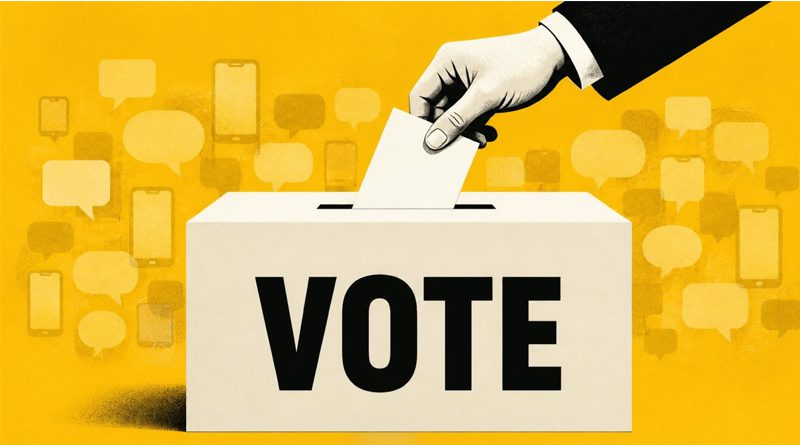
As the midterm elections this November approach, the distinction between hearing an opinion and being informed becomes blurrier by the minute. Political messages, arguments and personal opinions presented as information fill our screens and, for those of us who still read them, our newspapers.
Public opinion has become a crowded space. And since the rise of social media, we have entered an extraordinary “age of expression,” where anyone with a cellphone or internet access can question a politician, challenge a journalist, criticize an institution and reach thousands of people.
That freedom is worth protecting. But it comes with a price: we need to remain vigilant and learn to discern truth from falsehood.
From the Public Square to the Digital World
More than two thousand years ago, Athens experimented with democracy. The Roman Republic developed ideas of citizenship and law, while the Pax Romana later demonstrated that stability is not necessarily democracy.
The American experiment drew from those traditions to build a system based on elections, institutions, the rule of law and the right to question power. The building blocks of American democracy are the freedoms protected by the First Amendment: religion, speech, press and assembly, as well as the right to petition the government.
My favorite one, obviously, is freedom of the press.
We journalists have the responsibility to serve as independent sources of information, capable of investigating, verifying, questioning, correcting and helping citizens expand their knowledge and understanding of the world. As my journalist father used to say, “Journalists write history books daily in the newspapers.” I live and write by that maxim. That is why a free press matters.
First Amendment freedoms cannot be taken for granted. Government can challenge reporting it considers inaccurate. Journalists can challenge restrictions. Courts can review government action. Democracy was never designed to eliminate tension; it created institutions to manage it. Those checks, balances and freedoms are among the things that actually make America a great country.
Everybody wants to be a reporter
A 2025 Pew Research Center study found that 53% of American adults get news from social media at least sometimes; among adults ages 18 to 29, the figure reaches 76%. According to the Reuters Institute Digital News Report 2026, 54% use social and video networks for news, while 62% worry about distinguishing real from fake online. Ten percent already use AI chatbots for news, rising to 16% among people under 35.
These are trying times for professional journalism, when it seems that anyone with a phone wants to become a reporter and can go viral in minutes. Technology can expand knowledge and participation, and that is a good thing. But while freedom of expression gives us the right to speak, it does not make everything we say reliable, or everything we watch even real.
UNESCO’s Media and Elections report considers freedom of expression and access to information essential to democratic elections, while warning of challenges from social media and AI.
You know the situation is dire when even the Catholic Church joins the conversation. Pope Leo XIV made safeguarding human dignity in the time of AI the subject of his first Encyclical. Cardinal Robert McElroy, in a recent lecture, argued that technological progress must be measured by its impact on human dignity and the common good. The U.S. Conference of Catholic Bishops has likewise created an AI task force focused on keeping technology human-centered and protecting human dignity and democratic institutions.
The problem, then, is not social media or AI. It is the lack of regulations. The problem begins when we surrender our judgment to them. And that is a matter of conscience. It is something we cultivate within, not knowledge we simply acquire. Common sense, unfortunately, is not the most common of the human senses.
Democracy Begins Close to Home
Critical thinking develops when we read, compare, listen, question and participate.
Doral’s City Charter establishes nonpartisan municipal elections and embraces the benefits and responsibilities of Home Rule and public participation. Party labels do not determine proficiency in managing our traffic, public safety, taxes, businesses or parks. Those matters require knowledge, understanding, community involvement, experience and commitment. Voters who consider those criteria can make better-informed choices for the long-term future of the community.
America has never perfectly lived up to all its ideals. Neither have we always lived according to the moral principles many associate with our religious heritage. Our national motto, “In God We Trust,” should invite reflection: if we invoke God, should truth, human dignity, responsibility, justice and concern for our neighbor not matter in our public life? Otherwise, we risk invoking the name of God while forgetting what faith demands from our conscience. Faith should not replace critical thinking, but deepen our conscience.
So, as November approaches, vote, but vote with conscience. Read beyond the headlines. Verify before sharing. Listen to people who disagree with you. Participate in your community and know who wants to represent you.
Optimism about our country is still an option, renewed in our communities whenever an informed citizen chooses participation over indifference.
Freedom gives everyone a voice. Faith can give us a moral compass. But democracy asks something more personal and simple from each of us: show up to the polls and use your voice wisely.
Libertad para opinar, Criterio para Decidir
Por Maria Alejandra Pulgar
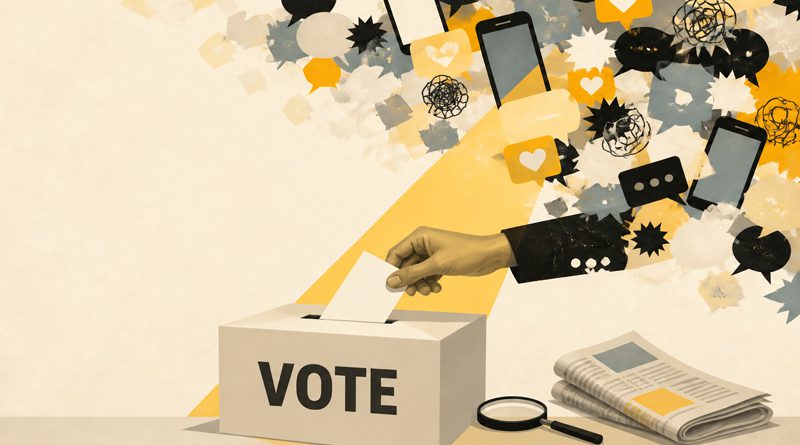
A medida que se acercan las elecciones de noviembre, la diferencia entre escuchar una opinión y estar informado se vuelve cada vez más difusa. Mensajes políticos, argumentos y opiniones personales presentados como información llenan nuestras pantallas y periódicos.
La opinión pública se ha convertido en un espacio saturado. Y desde el auge de las redes sociales, cualquier persona con un celular o acceso a internet puede cuestionar a un político, desafiar a un periodista, criticar a una institución y llegar a miles de personas.
Esa libertad merece ser protegida. Pero tiene un precio: debemos permanecer atentos y aprender a discernir la verdad de la falsedad.
De la plaza pública al mundo digital
Hace más de dos mil años, Atenas experimentó con la democracia. La República romana desarrolló ideas de ciudadanía y derecho, mientras que la Pax Romana demostró posteriormente que estabilidad no significa necesariamente democracia.
El experimento estadounidense transformó esas tradiciones para construir un sistema basado en elecciones, instituciones, el Estado de derecho y el derecho a cuestionar al poder. Entre los pilares de la democracia en EEUU están las libertades protegidas por la Primera Enmienda: religión, expresión, prensa y reunión, además del derecho a presentar peticiones al gobierno.
Los periodistas tenemos la responsabilidad de servir como fuentes independientes de información, para investigar, verificar, cuestionar, corregir y ampliar la comprensión del mundo. Como solía decir mi padre, que era periodista: “Los periodistas escribimos diariamente la historia en los periódicos.” Por eso importa una prensa libre.
Las libertades de la Primera Enmienda no pueden darse por sentadas. El gobierno puede cuestionar informaciones que considere inexactas. Los periodistas pueden cuestionar restricciones. Los tribunales pueden revisar las acciones del gobierno. La democracia nunca fue diseñada para eliminar las tensiones; creó instituciones para manejarlas. Esos balances y libertades están entre las cosas que realmente hacen de EEUU un gran país.
Todos quieren ser reporteros
Un estudio de Pew Research de 2025 encontró que el 53% de los adultos en EEUU obtiene noticias de las redes sociales; entre los adultos de 18 a 29 años, la cifra alcanza el 76%. Según el Digital News Report 2026 de Reuters, el 54% utiliza redes sociales y video para informarse, mientras que al 62% le preocupa distinguir entre lo real y lo falso en internet. Un 10% ya utiliza chatbots de inteligencia artificial para informarse, cifra que aumenta al 16% entre los menores de 35 años.
Son tiempos difíciles para el periodismo profesional, cuando parece que cualquiera con un teléfono quiere convertirse en reportero y puede hacerse viral en minutos. La tecnología puede ampliar el conocimiento y la participación, y eso es algo positivo. Pero, aunque la libertad de expresión nos da derecho a hablar, no convierte en confiable todo lo que decimos, ni en real todo lo que vemos.
El informe Media and Elections de la UNESCO considera que la libertad de expresión y el acceso a la información son esenciales para las elecciones democráticas, y advierte sobre los desafíos de las redes sociales y la inteligencia artificial.
Uno sabe que la situación es grave cuando hasta la Iglesia Católica entra en la conversación. El Papa León XIV hizo de la protección de la dignidad humana en tiempos de inteligencia artificial el tema de su primera encíclica. El cardenal Robert McElroy, en una conferencia reciente, sostuvo que el progreso tecnológico debe medirse por su impacto sobre la dignidad humana y el bien común. La Conferencia de Obispos Católicos de EEUU también creó un grupo de trabajo sobre inteligencia artificial enfocado en mantener la tecnología al servicio de la persona y proteger la dignidad humana y las instituciones democráticas.
El problema no son las redes sociales ni la inteligencia artificial. Es la falta de regulación. El problema comienza cuando les entregamos nuestro criterio. Y eso es un asunto de conciencia. Es algo que cultivamos interiormente, no un conocimiento que simplemente adquirimos. El sentido común, lamentablemente, no es el más común de los sentidos humanos.
La democracia comienza cerca de casa
El pensamiento crítico se desarrolla cuando leemos, cuestionamos y participamos.
La Carta Constitutiva de la Ciudad de Doral establece elecciones municipales no partidistas y reconoce los beneficios y responsabilidades del Home Rule y la participación pública. Las etiquetas partidistas no determinan la capacidad para manejar nuestro tráfico, seguridad pública, impuestos, negocios o parques. Esos asuntos requieren conocimiento, participación comunitaria, experiencia y compromiso. Los votantes que toman en cuenta esos criterios pueden elegir mejor pensando en el futuro de la comunidad.
Estados Unidos nunca ha estado perfectamente a la altura de todos sus ideales. Tampoco hemos vivido siempre de acuerdo con los principios morales que muchos asocian con nuestra herencia religiosa. El lema nacional, “In God We Trust”, debería invitarnos a reflexionar: si invocamos a Dios, ¿no deberían importar en nuestra vida pública la verdad, la dignidad humana, la responsabilidad, la justicia y la preocupación por el prójimo? La fe no debe sustituir el pensamiento crítico, sino profundizar nuestra conciencia.
Así que este noviembre, vote, pero vote con conciencia. Lea más allá de los titulares. Verifique antes de compartir. Escuche a quienes no están de acuerdo con usted. Participe en su comunidad y conozca a quienes quieren representarlo.
El optimismo sobre nuestro país sigue siendo una opción que se renueva en nuestras comunidades cada vez que un ciudadano informado elige la participación sobre la indiferencia.
La libertad nos da a todos una voz. La fe puede darnos una brújula moral. Pero la democracia nos pide algo más personal y sencillo: acudir a las urnas y usar nuestra voz sabiamente.