
Miami 2026: What You Need to Know to Experience the World Cup in the City
By: Jaime Bernal
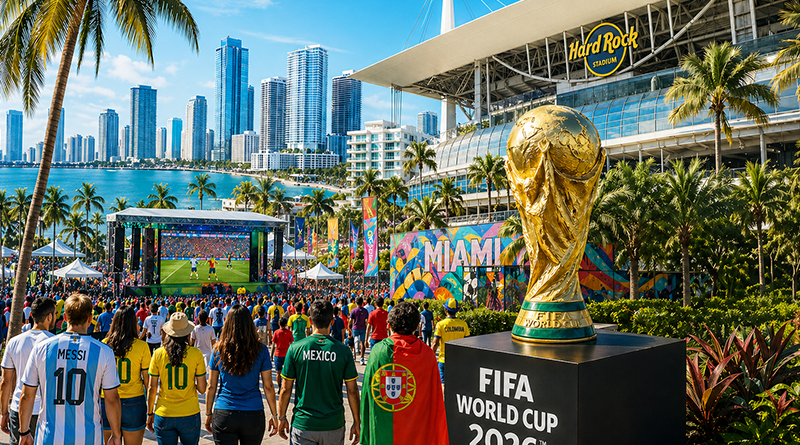
With the arrival of the FIFA World Cup 2026, Miami is preparing to become one of the tournament’s main hubs in the United States.
Beyond the matches at Hard Rock Stadium, the city will offer a full-scale experience that blends soccer, culture, and entertainment—while also presenting logistical challenges fans should keep in mind.
At the center of the celebration will be the FIFA Fan Festival at Bayfront Park, located in Downtown Miami along Biscayne Bay. The free event, scheduled from June 13 through July 5, will allow thousands of people to enjoy World Cup atmosphere without needing match tickets.
The festival is expected to welcome up to 30,000 visitors per day over 23 days, featuring live match broadcasts on giant screens, concerts, cultural performances, and activities for all ages. It will also include a wide variety of food options and family-friendly spaces, making it an ideal gathering place for both residents and visitors.
While Bayfront Park will be the main focal point, it will not be the only place to experience the tournament. Other county parks, including Tropical Park, Amelia Earhart Park, and Little Haiti Park, are also expected to serve as alternative viewing venues for major matches, offering options that may be closer and less congested.
For those attending games at the stadium, transportation will likely be the biggest challenge. Hard Rock Stadium, located about 15 miles from downtown Miami, is fully prepared in terms of infrastructure, but access still depends heavily on private vehicles. On match days, travel times can exceed 45 minutes due to traffic, while public transportation remains limited.
Driving is the most direct option, but also one of the most expensive, with parking fees that can exceed $175. Ride-share services such as Uber or taxis offer alternatives, though long wait times and surge pricing are common after events.
Temporary transportation solutions, such as special shuttle routes, may be introduced. Still, the main recommendation for fans is to plan ahead and allow extra travel time.
For visitors staying outside Miami, Brightline will be a key transportation link, connecting the city with destinations such as Fort Lauderdale, West Palm Beach, and Orlando. The MiamiCentral Station terminal in downtown Miami is expected to serve as a major arrival hub for travelers seeking to avoid highway traffic. Direct shuttle service from the station to the stadium may also be implemented to reduce congestion and parking costs.
Inside the stadium, fans can expect a world-class experience thanks to renovations completed between 2015 and 2017, which modernized Hard Rock Stadium with new seating, upgraded technology, and a canopy roof designed to shield spectators from the sun. That feature will be especially important, as the tournament takes place in June and July, when South Florida temperatures frequently exceed 90°F, combined with high humidity. Fans are advised to prepare accordingly to fully enjoy the matches.
Security preparations are also underway. Miami-Dade County has received more than $5 million in federal funding to strengthen its response capabilities for major events, including mobile command centers and advanced technology.
Beyond logistics, Miami’s lifestyle will be part of the attraction. During the World Cup, neighborhoods such as South Beach, Brickell, and Little Havana will offer distinct experiences ranging from beaches and nightlife to cultural and artistic attractions. The city’s diverse dining scene will further reflect Miami’s multicultural identity.
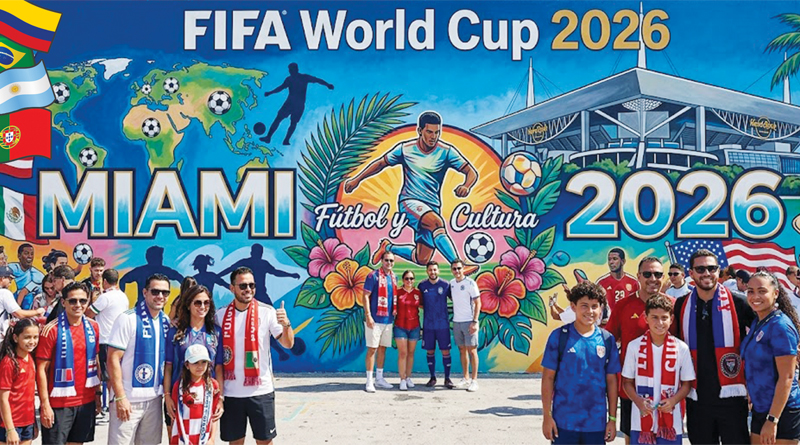
During the tournament, Wynwood Walls is expected to transform into an open-air gallery featuring murals inspired by soccer history and the cultural diversity of participating nations.
The World Cup is also expected to generate significant economic and social impact, boosting tourism, hotel occupancy, and local spending. Estimates suggest the tournament could generate as much as $1.5 billion for the region—an impact some analysts compare to hosting seven Super Bowls in a single month.
That momentum is already being reflected in the real estate and tourism sectors, where short-term rental prices in strategic areas such as downtown Miami have reportedly increased by as much as 400%. In addition, Miami International Airport is expected to welcome more than one million additional passengers, driving record hotel occupancy and increased spending at local businesses.
The tournament is also expected to create jobs in logistics, security, media, and event production. FIFA and the organizing committee have launched official hiring portals for specialists in technology, stadium management, and visitor services to help strengthen the regional workforce. Authorities, however, are warning residents to use only official channels such as FIFA Careers and avoid employment scams.
Part of the joint investment by FIFA and the county will also go toward upgrading community soccer fields in neighborhoods such as Liberty City and Little Haiti, helping improve local sports infrastructure for future generations.
The 2026 World Cup is set to mark a turning point in Miami’s history, leaving a legacy that extends far beyond the 90 minutes played on the field.
Miami is ready to welcome the world—but to make the most of the experience, fans should plan ahead and take advantage of everything the city has to offer beyond the stadium.
Miami 2026: Lo que debes saber para vivir el Mundial en la ciudad
Por: Jaime Bernal
Con la llegada de la Copa Mundial de la FIFA 2026, Miami se prepara para convertirse en uno de los epicentros del torneo en Estados Unidos.
Más allá de los partidos en el Hard Rock Stadium, la ciudad ofrecerá una experiencia integral que combina fútbol, cultura y entretenimiento, aunque también plantea algunos retos logísticos que los aficionados deberán tener en cuenta.
El corazón de la experiencia será el FIFA Fan Festival en Bayfront Park, ubicado en el Downtown frente a la bahía de Biscayne. Este evento gratuito, que se realizará del 13 de junio al 5 de julio, permitirá a miles de personas vivir el Mundial sin necesidad de tener entrada a los partidos.
Se espera que el festival reciba hasta 30.000 asistentes diarios durante 23 jornadas, con transmisiones en vivo en pantallas gigantes, conciertos, espectáculos culturales y actividades para todas las edades.
Además, contará con una variada oferta gastronómica y espacios pensados para familias, lo que lo convierte en el punto de encuentro ideal tanto para residentes como para visitantes.
Aunque el Bayfront Park será el epicentro, no será el único lugar donde se vivirá el Mundial. Otros parques del condado, como Tropical Park, Amelia Earhart Park y Little Haiti Park, también servirán como sedes alternas para ver partidos importantes, ofreciendo opciones más cercanas y menos congestionadas.
Sin embargo, para quienes asistan al estadio, el principal desafío será el transporte.
El Hard Rock Stadium, ubicado a unos 24 kilómetros del centro de Miami, está completamente listo en términos de infraestructura, pero su acceso depende en gran medida del automóvil. En días de partido, el trayecto puede superar los 45 minutos debido al tráfico, y el transporte público sigue siendo limitado.
Conducir es la opción más directa, aunque también la más costosa, con tarifas de estacionamiento que pueden superar los 175 dólares. Servicios como Uber o taxis representan una alternativa, pero suelen presentar largas esperas y precios elevados al finalizar los eventos.
Si bien podrían implementarse soluciones temporales, como rutas especiales de transporte, la recomendación principal es planificar con anticipación y considerar tiempos adicionales de desplazamiento.
Para los aficionados que se encuetran fuera de Miami, el tren de alta velocidad Brightline es una pieza clave para conectar la ciudad con destinos como Fort Lauderdale, West Palm Beach y Orlando. La terminal MiamiCentral, situada en Brickell, servirá como un núcleo de distribución masiva para los turistas que buscan evitar el tráfico de las autopistas interestatales.
Se prevé que se habiliten servicios de enlace directos desde la estación de tren hacia el estadio para mitigar el costo y la congestión del estacionamiento privado.
Dentro del estadio, la experiencia estará a la altura de un evento de esta magnitud gracias a las renovaciones realizadas entre 2015 y 2017, que dotaron al Hard Rock Stadium de tecnología moderna, nuevas gradas y un techo diseñado para proteger del sol. Este último será un factor clave, ya que el torneo se celebrará entre junio y julio, meses en los que el verano del sur de Florida suele presentar temperaturas que superan frecuentemente los 32°C (90°F) acompañadas de altos niveles de humedad. Por ello, se recomienda a los asistentes planificar su visita considerando estas condiciones extremas para disfrutar plenamente de los encuentros.
En materia de seguridad, las autoridades también han reforzado sus capacidades. El condado de Miami-Dade recibió más de 5 millones de dólares en fondos federales para mejorar su respuesta ante eventos masivos, incluyendo centros de comando móviles y tecnología avanzada.
Más allá de la logística, la experiencia en Miami se completa con su estilo de vida.
Durante la Copa Mundial, lugares como South Beach, Brickell, y Little Havana ofrecerán distintos ambientes, desde playas y vida nocturna hasta propuestas culturales y artísticas. A esto se suma una escena gastronómica diversa que refleja la identidad multicultural de la ciudad. Durante el torneo, el emblemático distrito artístico de Wynwood Walls se transformará en una galería al aire libre con murales temáticos dedicados a la historia del fútbol y la diversidad cultural de las naciones participantes.
El impacto del Mundial también será económico y social, impulsando el turismo, la ocupación hotelera y el consumo local. Se estima que el torneo podría generar hasta 1.500 millones de dólares en la región, un impacto económico que algunos analistas comparan con la magnitud de organizar siete Super Bowls en un solo mes.
Este fenómeno ya se refleja en el sector inmobiliario y turístico, donde los precios de alquileres vacacionales en zonas estratégicas como el Downtown han experimentado incrementos de hasta un 400%. Además, se anticipa que el Aeropuerto Internacional de Miami recibirá a más de un millón de pasajeros adicionales, impulsando niveles récord en la ocupación hotelera y el consumo en negocios locales.
Además, se crearán empleos en sectores como logística, seguridad, medios y producción de eventos. La FIFA y el comité organizador han habilitado portales oficiales para la contratación de especialistas en tecnología, gestión de estadios y servicios al visitante, buscando fortalecer la fuerza de trabajo regional. No obstante, ante este auge de vacantes, las autoridades han emitido alertas para que los ciudadanos utilicen únicamente canales oficiales como FIFA Careers, evitando caer en estafas.
Parte de la inversión conjunta de FIFA y el condado se destinará a la renovación y mejora de canchas de fútbol comunitarias como Liberty City y el Pequeño Haití, fortaleciendo la infraestructura deportiva local para las futuras generaciones.
El Mundial 2026 marcará un antes y un después en la historia de Miami, dejando un legado que va mucho más allá de los noventa minutos en la cancha.
Miami está lista para recibir al mundo, pero para disfrutarla al máximo, el aficionado deberá prepararse con anticipación y aprovechar todas las opciones que la ciudad ofrecerá más allá del estadio.
I did not go see any of the games but watched as many as could on tv and great games , to bad they are over as teams played great .