
Voices with Purpose: Leadership for Community Well-being.
By Maria Alejandra Pulgar
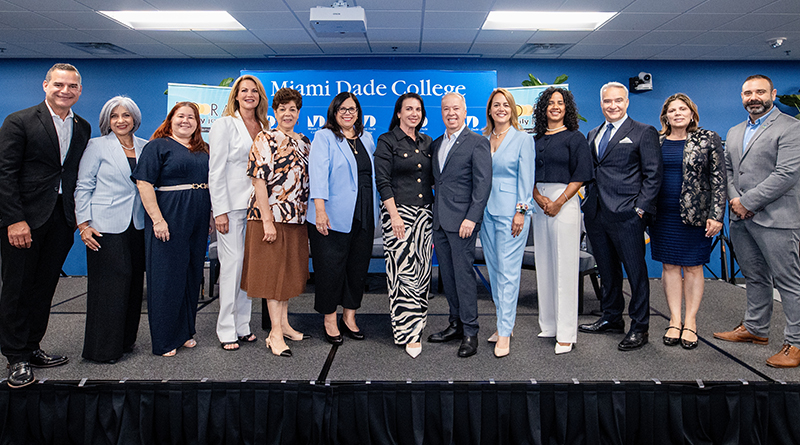
Doral Family Journal organized the forum “Voices with Purpose: Social Impact in Action” on April 29 at Miami-Dade College West Campus. The event brought together a group of leaders from nonprofit organizations committed to transforming communities through concrete and effective actions.
Journalist Eileen Cardet moderated the event, guiding the conversation with a human and empathetic approach, addressing topics such as family support, community health and the well-being of older adults, education, social innovation, creating empathetic communities, and solutions for the future.
The purpose of the event went beyond highlighting the most critical needs in our society, but also to propose collaborative solutions and emphasize the power of citizen collaboration and the social responsibility we have as individuals.
A Panel of committed individuals
The perspectives of each panelist highlighted the importance of a multidisciplinary approach to community needs in order to provide effective services. George Yacoubian, Community Education Manager of the South Florida Donor Network, shared that his organization’s work is fundamental in dispelling myths about organ donation and educating the public about the value of life. Soraya Rivera-Moya, Executive Director of Ronald McDonald House Charities of South Florida, contributed her profound insight into providing comprehensive support to families in medical crises, creating a haven of stability in times of uncertainty.
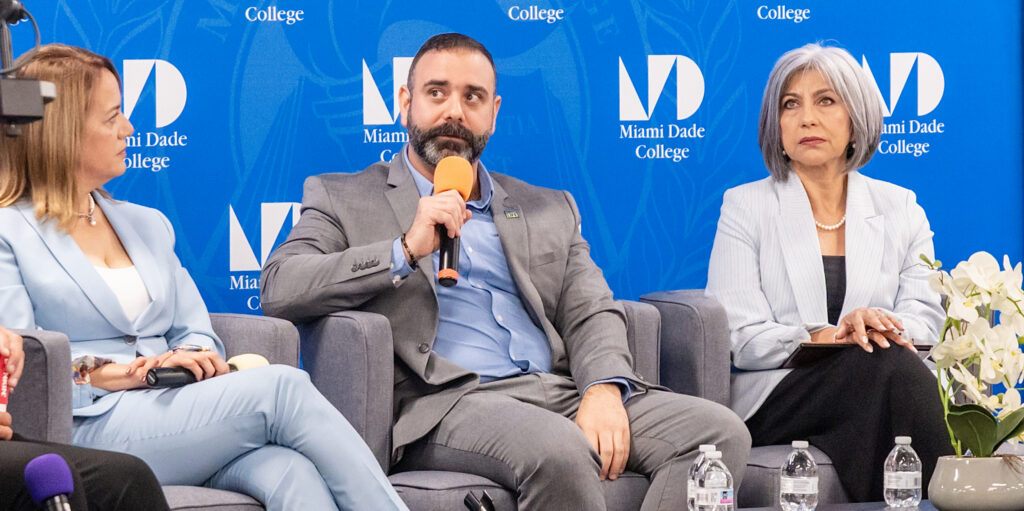
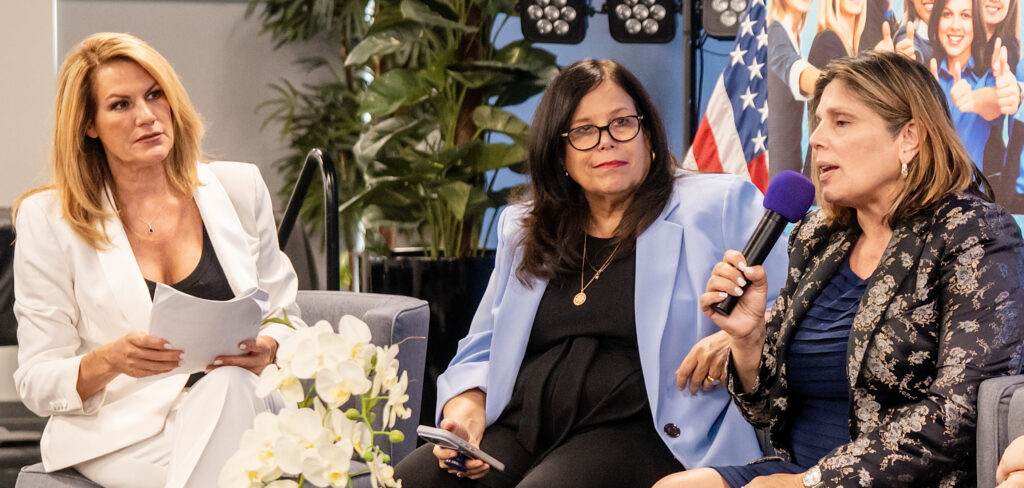
The needs of the elderly population and their ongoing care were represented by Dennise Nicola, Director of Business Development at Florida PACE Centers, and Blanca Ceballos, Community Relations Manager at United HomeCare. Both organizations emphasized the importance of ensuring dignified aging for seniors, preserving their autonomy, and ensuring they can remain in their homes with appropriate care.
Ivonne Fernández, Senior Associate Director of Elder Advocacy at AARP Florida, shared important information about her organization’s work in education for economic protection, holistic well-being, and advocacy for citizens’ rights as they age. Felipe Pinzón, President and CEO of Hispanic Unity of Florida (HUF), shared strategies for achieving self-sufficiency for immigrant families, promoting their full integration into the region’s labor and economic development.
Access to justice and legal defense were addressed by Sergio Cabanas, President and CEO of the Cabanas Connection Foundation, who emphasized the urgency of closing legal gaps in our society. He explained how his organization designs and conducts free legal education workshops and assists residents so they can face legal challenges with appropriate support and in their own language.
The academic and civic perspective was presented by Ana María Soto, Program Manager of Institute of Civic Engagement and Democracy (ICED) at Miami-Dade College, who promotes student engagement with the needs of their community. Community emotional well-being was analyzed by Mayte Canino-Mazzini, General Manager of Keralty Compassionate Communities, which focuses on mitigating social isolation and improving the mental health of the population through the use of wellness tools and preventative programs.
Missions that Transform Lives
Beyond their institutional objectives, these organizations represent hope and improvements in the quality of life for thousands of people in the community, from different perspectives.
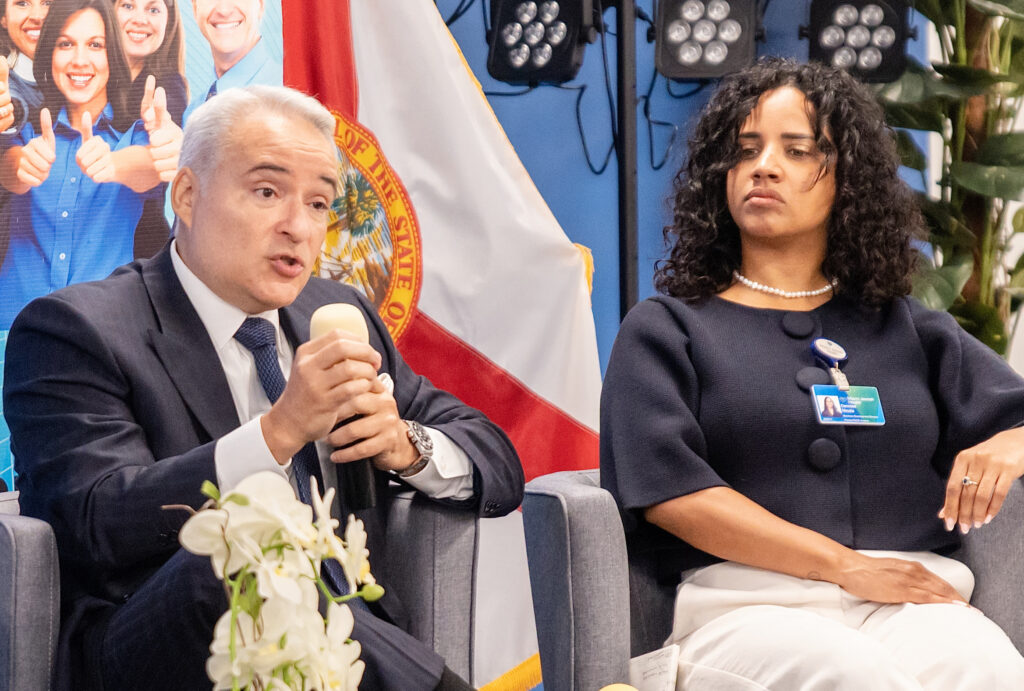
Yacoubian was emphatic in describing the magnitude of the impact of organ, eye, and tissue donation: “One person has the capacity to save up to eight lives through organs and improve the lives of more than 75 people through tissues.” For Yacoubian, the goal is to connect the will to give with the need to live, providing extensive education about a process that is often misunderstood due to a lack of information and cultural barriers.
Rivera-Moya demonstrated with impressive testimonials why her organization represents a true “home away from home” for those going through medical crises with their children: “Our house not only offers a roof and a bed; it offers the emotional stability a mother needs to focus on her child’s recovery.”
For leaders focused on elder care, the mission is clear: to prevent isolation, dependency, and premature institutionalization by offering alternatives that honor the lives of older adults. Nicola emphasized that “by 2040, 25% of the county’s population will be older adults,” making the use of preventative tools and access to programs like Medicaid urgent. “Our main mission is to provide the tools so that older adults can age in their own homes and prevent them from going to a nursing home.”
Blanca Ceballos agreed with this position, highlighting that providing in-home care is not just a medical service, but a lifeline for families. “Public funds are limited, so it is vital to plan and know how to access the aid that allows for in-home assistance.”
Knowledge protects and empowers
Knowledge of the legal and labor systems and having legal representation can change a family’s destiny, preventing situations of extreme vulnerability. Felipe Pinzón explained that his organization has served more than 600,000 people, guiding them toward economic independence and holistic development. In an environment where many immigrant professionals arrive without their degrees being validated, his organization acts as the necessary bridge to ensure that talents are not lost to the informal economy.
Sergio Cabanas explained that “63% of people in the court system are without legal representation.” The Cabanas Connection Foundation aims to guarantee that no one loses their fundamental rights due to language or economic barriers. His team’s work consists of identifying each person’s legal problem and connecting them with the appropriate services in Spanish. They also organize educational workshops and provide scholarships and resources to guide the community so they can navigate their legal matters with confidence and security.
For her part, Ana María Soto emphasized that civic engagement should not be a secondary element, but rather a fundamental part of young people’s education. “In the last year, we engaged 28,085 students in over 68,000 hours of community service.” For Soto, the success of the Institute for Civic Participation and Democracy (ICED) lies in inspiring young people who, despite the economic and academic pressures of modern life, choose to dedicate their time to improving society.
The Challenges of Service
These foundations face operational and environmental challenges in carrying out their work. Mayte Canino-Mazzini emphasized that “social isolation is a public health problem that isn’t cured in a hospital; it’s cured in the community.” She explained that her organization trains all community members in stress management and the use of wellness and mindfulness techniques to perform their tasks, work together, and care for one another.
Among the structural and logistical challenges, Dennise Nicola mentioned that government resources are limited, which restricts the number of people who can receive assistance. For her part, Ivonne Fernández pointed out that defending the rights of people over 50 requires a constant and firm voice before those who make decisions with social and economic impact.
Tangible and Lasting Results
The result of all these coordinated efforts is visible in every corner of our region, creating a network of mutual support and resilience. The conclusion shared by all the forum participants was that social responsibility must be part of our daily lives. The final call was for proactive action; to not see these causes as external, because social impact in action is the only way to build a truly resilient, supportive, and humane community.
________________________________________
Below you can find the contacts of the participating organizations:
- South Florida Donor Network: https://www.sfldonor.org
- AARP Florida: www.aarp.org/states/florida/
- The Cabanas Connection Foundation: www.thecabanasconnection.com
- Hispanic Unity of Florida (HUF): www.hispanicunity.org
- Keralty Compassionate Communities: www.keralty.com
- Ronald McDonald House Charities of South Florida: www.rmhcsouthflorida.org
- Miami-Dade College – ICED: www.mdc.edu/iced/
- Florida PACE Centers: www.floridapacecenters.org
- United HomeCare: www.unitedhomecare.com